
Bumper Stickers — What Nobody Tells You
I love bumper stickers. Truly. They’re the last surviving analog social media feed—curated, opinionated, and permanently glued to a depreciating asset. In a world of fleeting digital noise, a bumper sticker is a commitment. A tiny, sticky manifesto.
They entertain us while we sit in traffic, slowly questioning our life choices. They feel personal—like little gifts from strangers who want you to know exactly who they are… or at least who they think they are. Because that’s what bumper stickers really are: identity broadcasts. Not just self-expression, but belonging. Signals that say, “These are my people. Please categorize me accordingly.”
And oh, we categorize. You can almost date the driver by the sticker type.
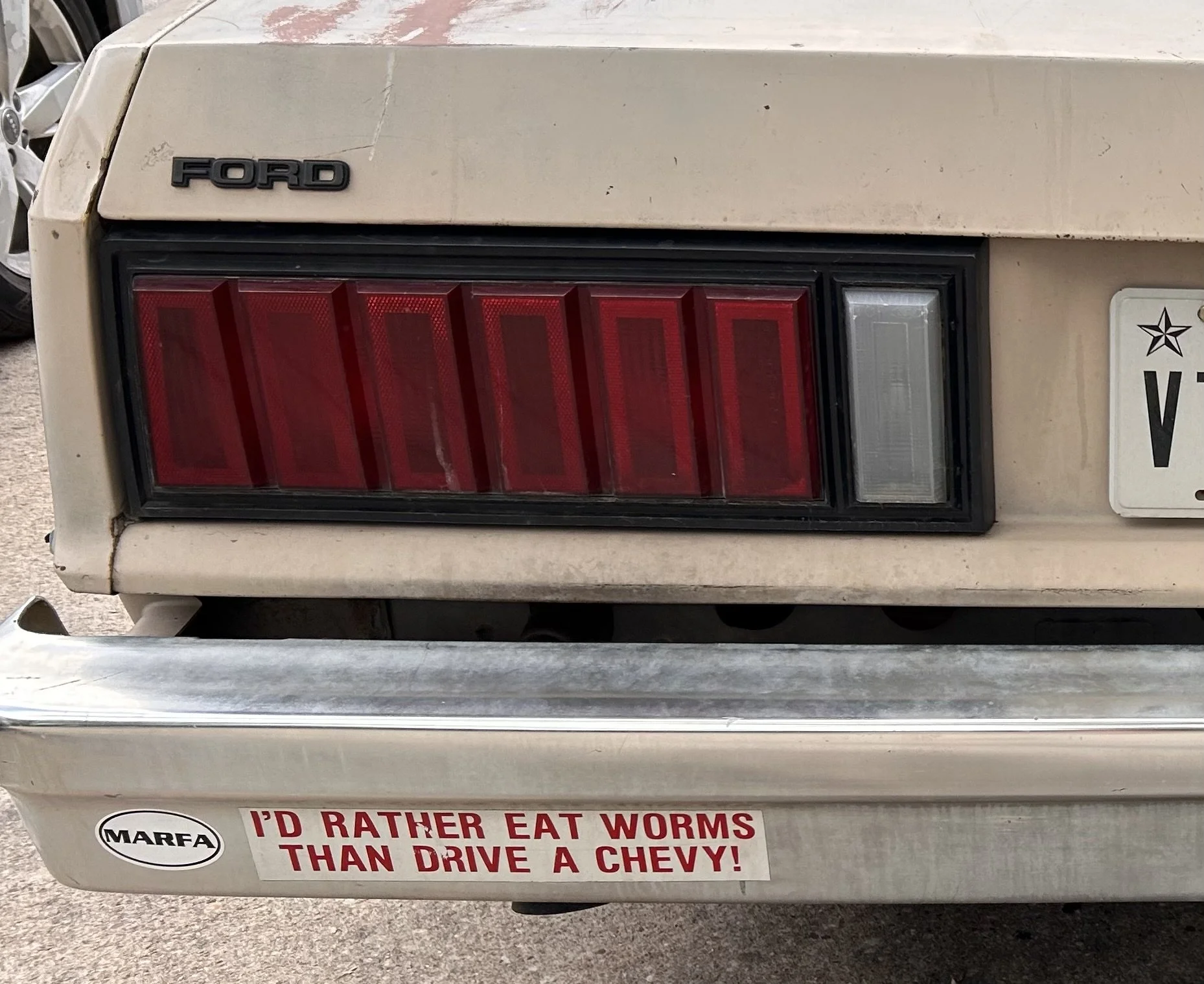
There’s the classic brand-loyalist—usually a boomer—declaring allegiance to one car manufacturer while treating another like a contagious disease. It’s less a preference and more a blood feud.
Then you’ve got the “Student Driver – Please Be Patient” crowd. A modern masterpiece. These aren’t new drivers. These are strategic drivers. Millennials and Gen Z figured out something brilliant: why improve your driving when you can outsource accountability to a sticker? One sticker says “please.” Three stickers say “I dare you to honk.” It’s the participation trophy of road etiquette.
And then there are the aspirational stickers: “I’d rather be fishing.” and “My other ride is an airplane.” Translation: I am not emotionally present in this vehicle.
Are these statements? Invitations? Cry for help? Should we follow them to learn more? Is there a second act where we all end up at a lake discussing life choices?
Here’s where it gets interesting. We’re told humans are generally good, polite, rational creatures. Then research shows up and politely disagrees.
A PEMCO Insurance poll found that 20% of drivers actually change their behavior based on bumper stickers. Meanwhile, researchers at the University of Colorado labeled them “territorial markers”—which sounds less like harmless self-expression and more like something wolves would do. Even better: cars with multiple bumper stickers are associated with 16% more road rage incidents.
The content doesn’t matter. Not politics. Not humor. Not your “Coexist” sticker. Nothing. Apparently, it’s not what you say—it’s the audacity of saying anything at all.
So what’s triggering people? Jealousy? Sticker envy? A deep existential crisis caused by adhesive confidence? No one knows. But we do know this: the more you decorate your car, the more likely someone else is emotionally affected by it… and not in a “nice sticker!” kind of way.
And then there’s the small issue of security. Some safety experts suggest we’re basically crowdsourcing our personal data to strangers. Stickers like: “My child is an honor roll student at Liberty Elementary.” Fantastic. Now everyone knows where your kid is during the day—and when your house might be empty.
Or the outdoor enthusiast proudly advertising their expensive hobbies: Kayaks. Bikes. Ski gear. You’re publishing an inventory list, not interests. It’s like putting a menu on your car that says, “Ask me about the valuables in my garage.”
But let’s not forget the long-term commitment. Bumper stickers are easy to put on. Removing them? That’s a full-blown engineering challenge. Years later, you’re scraping off a fossilized layer of glue, questioning every decision that led you here. At some point, the sticker outlives the personality it was meant to represent.
Which brings us to the inevitable conclusion: maybe the digital world got one thing right. Instead of permanently branding your car, why not install a small OLED display on the rear window? Rotate messages daily. Mood-based messaging. Seasonal sarcasm. Real-time updates.
“Today’s vibe: Don’t.”
At least then your identity crisis can be updated with a software patch instead of a heat gun.