
Remember when we were young and bought a raffle ticket with our pocket money?
A few coins, one ticket, and a reasonable chance of winning something. The prize was announced upfront, the rules were easy to understand, and you couldn't spend money you didn't have. You handed over your cash, waited for the draw, and either got lucky or went home empty-handed.
A simple transaction. No complicated terms and conditions. No financial engineering. No algorithm trying to figure out how to keep you spending.
As adults, some of us ventured into casinos. Maybe during a vacation, perhaps for a special occasion. You had to get dressed, travel somewhere, and physically enter a building designed to separate you from your money.
It was an event. How quaint.
The casino in your pocket
Ever watched livestreams of professional gamblers playing slot machines?
I'm not talking about those polished, pre-recorded videos where someone hits a jackpot every fifteen minutes, screams into the camera, and conveniently forgets to mention the other six hours of losses.
I mean actual livestreams.
You watch the reels spin, the money disappear, and the occasional win provide just enough excitement to keep things going. Even experienced gamblers can lose repeatedly. And the more candid ones will tell you what should be obvious: it's luck. The machine doesn't know who you are, how much you've already lost, or whether you deserve the next big win.
You can manage your bankroll and make decisions about when to stop. You cannot persuade a slot machine that you've suffered enough and are now entitled to a payout.
What a sobering experience. Not exactly inspiring confidence to put my savings there. But hey, it's entertaining.
And entertainment is precisely where the business opportunity begins.
The internet has changed gambling beyond recognition. You no longer need a casino, a vacation, or even a particularly good reason to place a bet. You just need a smartphone. And preferably, a credit card.
Everything is monetizable
We live in an age when there is apparently nothing that cannot be turned into a business.
Have a crazy idea? Great. Build an app, raise venture capital, and figure out how to monetize it. The trick is to make the product so convenient that people barely notice the transaction. Add some sophisticated technology, a slick interface, and enough fine print to keep the lawyers employed.
And just like that, you've built a modern financial trap that doesn't look like a trap.
If I can't see the trap, it isn't there.
Traditional gambling at least had a recognizable setting. Bright lights, roulette wheels, slot machines, and people making questionable decisions in expensive clothes.
Today's version can look like a news app, a sports platform, or an innocent little game on your phone. The product doesn't even have to call itself gambling.
It can be a prediction market. A financial innovation. A revolutionary new way to express your opinion.
And suddenly, you're not losing money. You're participating in the future of finance. How sophisticated.
Gen Z wants a shortcut
According to the internet's army of commentators, Gen Z is dissatisfied with practically everything.
Regular jobs are boring. Getting hired is an ordeal. Promotions are slow. Rent is outrageous. Homeownership feels increasingly remote. Even the daily Starbucks habit and the latest iPhone have become expensive luxuries.
And let's not forget the endless social media commentary explaining why the entire economic system is rigged against young people. Some of these complaints are legitimate. Housing affordability is a serious problem, and younger generations face real financial pressures.
But here's where things get interesting: When the traditional path to financial security looks increasingly difficult, the promise of a shortcut becomes incredibly attractive.
Why spend decades building wealth when you might be able to make a fortune in a weekend?
Why invest patiently when you can turn your opinion about tomorrow's headlines into a potential payout today?
Why save when the next big win could change everything?
Enter the fusion of turbo-capitalism and gambling. Sports betting already turned watching a game into a financial event. But why stop there? There's an even bigger market waiting to be exploited: people who have opinions about absolutely everything. And who doesn't?
Welcome to the social media of gambling
Meet Kalshi and Polymarket.
These platforms let users trade contracts tied to the outcomes of future events. Depending on the platform and the market, those events can range from elections and economic indicators to weather and popular culture.
The basic concept is straightforward: a contract pays according to whether a specified event occurs. Its price reflects what traders are collectively willing to pay for that outcome, although it is not a guarantee of the true probability.
In other words, you can put money behind your opinion about the future. And opinions are something the internet produces in unlimited quantities.
Will a politician say a particular phrase in the next speech?
Will a celebrity wear a red dress on a talk show?
Will tomorrow's temperature exceed 75 degrees?
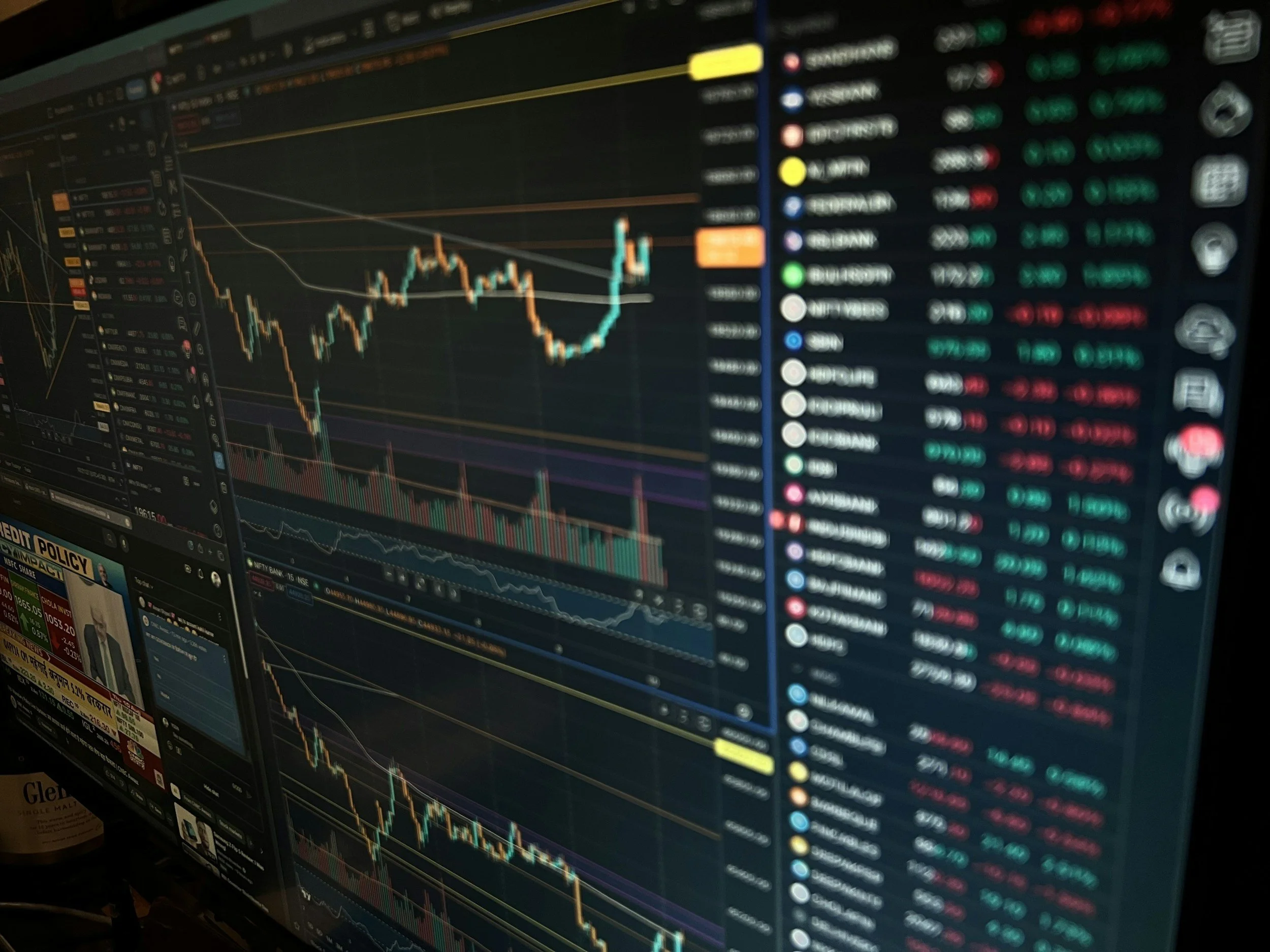
There is a market for almost anything someone believes can be turned into a tradable event. At this point, I'm surprised nobody has launched a market on whether my cat will use the litter box again before midnight. Actually, let's not give anyone ideas.
The genius of this business model is that you don't need to teach an entire generation how to use it. Social media has already done the training. Swipe. Scroll. Tap. Repeat.
Instagram, dating apps, online shopping, and mobile games have conditioned us to expect an endless stream of new things to look at and react to. There is always another video, another profile, another product, another little hit of excitement.
Now apply the same interface to financial risk. Instead of swiping through videos, you swipe through possible bets. Instead of liking a post, you buy a contract. Instead of waiting for the next episode, you wait for the next event to resolve.
And instead of spending money on entertainment, you convince yourself you're making an informed financial decision. What could possibly go wrong?
The next win is just one swipe away
Here's the really dangerous part.
You don't need cash in your wallet. You don't need to drive to a casino. You don't even need to interrupt your lunch break. Your account is already there, connected to your bank or payment method. And the next opportunity is just one swipe away.
You win a little, and you feel clever.
You lose a little, and you tell yourself you were unlucky.
You lose a lot, and you start looking for the next opportunity to recover your money.
After all, you can't finish the day down. You were right about the last election, the inflation numbers, and that football game. Surely you can get the next one right. And even if you can't, you can always increase the stake.
This is where entertainment can become a destructive habit. The possibility of winning creates excitement, while losses can encourage people to chase the money they've already spent.
Not everyone who uses prediction markets will develop a gambling problem. Nor does every participant bet recklessly. But the combination of constant access, rapid feedback, and the temptation to recover losses deserves serious attention. Especially when the same device contains your social life, your banking app, your work messages, and every distraction imaginable.
The casino isn't just in your pocket anymore.
The casino is competing for the same attention you need to manage your life.
Retirement plan? What retirement plan?
Let's imagine a young person who feels financially trapped.
They have student loans, expensive rent, and a job that doesn't pay enough to make them feel secure. Saving for retirement seems pointless when buying a home already feels like an impossible dream.
Then someone on social media announces they've made thousands of dollars trading prediction markets.
The screenshots look impressive. The winning trades are everywhere. The losses? Not so much.
Nobody posts a screenshot of their account after a disastrous week. Nobody wants to advertise the fact that they lost their rent money betting on an election outcome. And so the illusion grows.
Our young investor decides to try it. A little money at first. Then a little more. Perhaps they dip into savings. Perhaps they use a credit card. Perhaps they convince themselves that this is an investment strategy rather than gambling.
Eventually, they start chasing losses. The retirement account gets raided. The emergency fund disappears. The credit card balance grows.
But they don't stop.
The next win will replenish the account. Surely.
And then, one day, the balance is zero. No money for a house deposit. No emergency fund. No retirement savings. Just debt, regret, and a collection of screenshots proving that they were almost right.
Almost.
And while they were busy trying to outsmart the market, time kept moving. Compound interest didn't wait for them.
Who's responsible when the money is gone?
Now comes the inevitable argument. When young people find themselves financially ruined, who do they blame?
The platforms?
The politicians?
The financial system?
Their parents?
The previous generation?
There are legitimate questions to ask about regulation, consumer protection, marketing practices, and the way gambling products are presented to consumers. Companies should not escape scrutiny simply because their products are technologically sophisticated.
But personal responsibility matters, too. Nobody can promise that every risky decision will be rescued by the government, an employer, or a generous relative.
And blaming an entire generation for its financial difficulties is just as lazy as pretending every financial problem can be solved by winning a bet.
Gen Z is not uniquely foolish. Previous generations blew money on casinos, speculative investments, get-rich-quick schemes, and financial products they barely understood.
The difference today is the delivery mechanism. The friction is gone. The opportunity to make another bet is always there.
And the line between entertainment, speculation, and gambling can become surprisingly difficult to see when the interface is designed to make every transaction feel effortless.
The technology is new. The human weaknesses are not.
The end of the game
I don't know whether Gen Z will gamble away its financial future. That would be a ridiculous prediction to make about an entire generation.
But I do know that a society in which financial insecurity meets frictionless gambling has created an uncomfortable combination.
Young people are told to take responsibility for their financial future, build wealth, save for retirement, and invest wisely. At the same time, they're surrounded by products that turn the news, sports, politics, and even tomorrow's weather into opportunities to risk money.
They are told to think long-term while being offered an endless stream of short-term thrills. They are told to build wealth patiently while watching other people advertise spectacular wins. They are told that the future is uncertain—and then invited to bet on it.
What a business opportunity.
And if some people lose their savings along the way? Well, they should have read the terms and conditions. The platform has a business to run, after all.
So here's a modest suggestion for anyone tempted to put their financial future on the line. Watch the livestreams. Look at the losses. Read the rules. Understand what you're risking. And never confuse the ability to place a bet with the ability to make money.
Your future may not be guaranteed. But you don't need to make it even less secure by turning every spare dollar into a wager.
The house doesn't need you to lose every bet. It just needs you to keep playing.
And your retirement account? It would probably prefer that you didn't.