
Superheroes, Supervillains, and the Billionaires Who Want to Save Humanity From Itself
Silicon Valley is an awesome place to be. New and crazy ideas are born every day, and venture capital is flowing freely to fund the next big thing—or, more accurately, to make sure nobody misses out on it.
We've moved well beyond basic computer technology and shopping apps. Artificial intelligence is finding its way into everything from your home office to military operations. AI-assisted targeting? Autonomous fighter jets? The prospect of increasingly automated decisions in nuclear command systems? Welcome to the future. It never looked so bright.
Meanwhile, tech billionaires are locked in a race to determine who is the richest, smartest, and most powerful of them all. Their brains are running at full speed, fueled by superhero comics, science fiction, and the daily catastrophes unfolding on planet Earth.
Climate change. Extreme weather. Pandemics. Resource depletion. Growing pressure on infrastructure and living standards. It sometimes feels as though we're wearing out our beloved planet faster than we're able to recognize the damage.
And what do you do when you have enough money to buy a small country, a team of engineers, and a rocket? Apparently, you start thinking about saving humanity.
The superhero complex
Silicon Valley has cultivated a particularly powerful set of ideas:
The future is heading toward catastrophe unless someone intervenes.
Technology gives exceptional individuals the power to intervene on a civilization-wide scale.
The scale of the mission justifies extraordinary risks, concentrated wealth, and sometimes a willingness to bypass conventional constraints.
Wow. That's convenient.
The billionaire's fears become the justification for concentrating even more wealth and power in the billionaire's own hands.
I've seen something like this before. You only need to look back a few hundred years to see what kings and religious authorities did when they convinced themselves they possessed a higher purpose. Divine right was a wonderful invention if you happened to be the person wearing the crown.

Now we have technological destiny instead. The underlying logic is remarkably familiar: I understand the threat. I understand the future. You don't. Therefore, you should let me decide.
And who knows? Maybe the person in question really is exceptionally intelligent. Maybe they really can build things the rest of us can barely comprehend. But being good at building rockets, software, or artificial intelligence doesn't automatically make you qualified to determine the future of human civilization.
This is a worldview that treats humanity's future as an engineering problem—and gives a handful of extraordinarily powerful people far too much confidence in their ability to decide what is best for everyone else.
Treat the planet like a startup. The motto? Fail fast.
Except that when a startup fails, investors lose money. When an experiment involving an entire civilization fails, the rest of us might not get another funding round.
The same person who sees himself as humanity's savior may be the person least equipped to recognize the limits of his own judgment. We've seen that character in superhero comics plenty of times. Usually, the moment he starts believing he alone knows what's best for everyone, the trouble begins.
And here's the really convenient part: if you're rich enough to finance your own escape pod, underground shelter, private space program, or artificial intelligence, the end of civilization can start looking less like a collective tragedy and more like an expensive personal inconvenience.
I'm good. Why should I care about the mob and rabble down there?
The prophecy business
Having a worldview is nice. But a worldview alone isn't enough to reshape society. You need a compelling story about where humanity is heading—and why there is supposedly no alternative. Enter the new prophets of technological destiny.
Their message goes something like this:
Earth is an inherently unstable, temporary vessel. Biological humanity is merely an early stage in our development. Our true destiny lies in merging with machines, transcending our biological limitations, uploading our minds, or colonizing Mars.
Suddenly, the Cybertrucks, satellite networks, and rockets launching into space every few days start to look like more than just products and businesses. They become pieces of a much larger vision of humanity's future.
Consider Elon Musk.
Musk has spoken openly about becoming a multiplanetary species, reducing humanity's existential risks, and the importance of expanding beyond Earth. He has also acknowledged the influence of science fiction and technological heroes on his engineering ambitions. The Iron Man comparison is particularly fitting: a wealthy inventor who combines technical brilliance, extraordinary resources, and a mission to save the world.
But there's an uncomfortable question here. Didn't Musk also spend years promoting electric vehicles, solar power, and battery storage as ways to improve life on Earth? Those technologies haven't disappeared. Tesla still sells electric vehicles, and its energy business remains active. So it would be unfair to claim that Musk has simply abandoned the planet.
The more interesting question is whether the grand vision of escaping Earth can overshadow the less glamorous work of fixing it. Climate change doesn't wait for the first Martian city. Poverty doesn't disappear when another rocket reaches orbit. And the people who are struggling today cannot pay their bills with the promise of a digital afterlife in the twenty-second century.
When the future becomes more exciting than the present, the danger is that real, immediate problems begin to look like distractions from the grand mission. That's a rather convenient arrangement for anyone whose business happens to benefit from building the future.
Apocalypse capitalism
Let's take the argument one step further.
What happens when fear of civilization's collapse becomes a business opportunity?
You can sell the technology to prevent catastrophe. You can sell the technology to prepare for catastrophe. And if your business model is ambitious enough, you can sell the technology that supposedly makes humanity's escape from catastrophe possible. Rockets. Artificial intelligence. Surveillance systems. Autonomous weapons. Underground shelters. Private infrastructure. The list goes on.
I'm not suggesting that every one of these investments is motivated by a desire to see civilization collapse. There is no need to invent a secret conspiracy when the incentives themselves are interesting enough.
Call it apocalypse capitalism: a system in which the possibility of disaster helps justify enormous investments in technological solutions, while the social and environmental costs of those solutions can be pushed onto everyone else.
The more catastrophic the future looks, the more urgent the technological rescue becomes. And the more urgent the rescue becomes, the easier it is to argue that ordinary safeguards, democratic debate, and inconvenient regulations are luxuries we can no longer afford.
Why wait for the public to agree when the future is supposedly at stake?
Why worry about the consequences when the technology is meant to save humanity?
Why fix the system when you can build a new one?
It's a compelling sales pitch. Especially if you happen to own the company selling the solution.
Peter Thiel and the Antichrist problem
Then there's Peter Thiel, who brings a different flavor of apocalypse to the table.
Thiel has explored the relationship between technological progress, political freedom, religious prophecy, and the possibility that humanity's future could be shaped by authoritarian forces. In his public discussions of the Antichrist, he has examined the idea that fears of existential catastrophe could be used to justify a global system of control.
It's a fascinating subject. It is also a dangerous one when speculation begins to masquerade as certainty.
Thiel is associated with Palantir, a company whose software supports data analysis and operational decision-making across government, defense, and commercial organizations. Such systems can serve legitimate purposes, including defense and public safety. They can also raise serious questions about surveillance, privacy, accountability, and the concentration of institutional power.
And here is the uncomfortable tension. If you fear an authoritarian technological state, what happens when you invest in technologies that could help powerful institutions monitor populations, aggregate information, and exercise control?
That isn't proof that Thiel wants to create the dystopia he discusses. Nor is there sufficient evidence to claim that he believes an apocalypse is predetermined and therefore should simply be exploited. But the contradiction deserves scrutiny.
You can fear a dystopian future and still help build some of the infrastructure that could make it possible.
You can believe you're protecting freedom while developing tools that make surveillance more powerful.
You can warn about authoritarianism while arguing that extraordinary threats require extraordinary responses.
And you can convince yourself that your own intentions will always be enough to distinguish your use of power from someone else's abuse of it.
History suggests that good intentions are not a particularly reliable safeguard against concentrated power.
Who gets a seat on the escape ship?
Now let's imagine that the prophets are right about at least one thing: humanity will eventually face a technological or environmental crisis that fundamentally changes how we live.
What happens next?
Do we work together to preserve the planet and build a more resilient civilization? Or do the people with the most money and the best technology get to decide who is worth saving?
Perhaps some of us will be invited to join the billionaires on their journey to a new world. A fresh start on Mars. A new society, free from the mistakes of the old one.
We've done this before, haven't we? A new world. A new beginning. A chance to leave the old order behind and build something better.
Just look at the history of colonization. The promise of a fresh start did not mean that everyone involved enjoyed equal rights, equal opportunities, or an equal share of the benefits.
Why should a technologically advanced colony be any different?
Who owns the infrastructure? Who controls access to essential resources? Who decides the rules? Who gets to leave? And what happens when the people running the system decide that some passengers are more valuable than others?
I can already imagine the recruitment requirements.
First, demonstrate your technical skills.
Then, demonstrate your loyalty.
And finally, please report to the nearest machine-learning department for your mandatory human-machine integration assessment.
Because who wouldn't be keen on controlling the fellow travelers riding with them to Mars?
After all, a spaceship is a rather convenient place to exercise authority. There aren't many alternative transport providers when you're halfway between planets.
And if the new society doesn't work out, there is always the next big thing.
The real choice: prophecy or free will?
I guess the real question is whether I believe all this prophecy B.S. and give up—or fight back.
Not against technology itself. I'm not suggesting we should abandon scientific progress, shut down the internet, or start smashing computers in the name of humanity. Technology can make our lives better. It can improve medicine, expand access to knowledge, help us tackle environmental problems, and give people opportunities that previous generations could barely imagine.
But technology is a tool, not a moral philosophy. And the people who build it are not automatically entitled to decide how the rest of us should live.
The future isn't a predetermined destination that a handful of billionaires have somehow managed to see before everyone else. It is something we shape through political choices, public institutions, collective action, and the willingness to challenge people who claim to know better.
Watched the 35th anniversary of Terminator 2: Judgment Day in the movie theater, and it gave me a surprising amount of confidence that not all hope is lost.
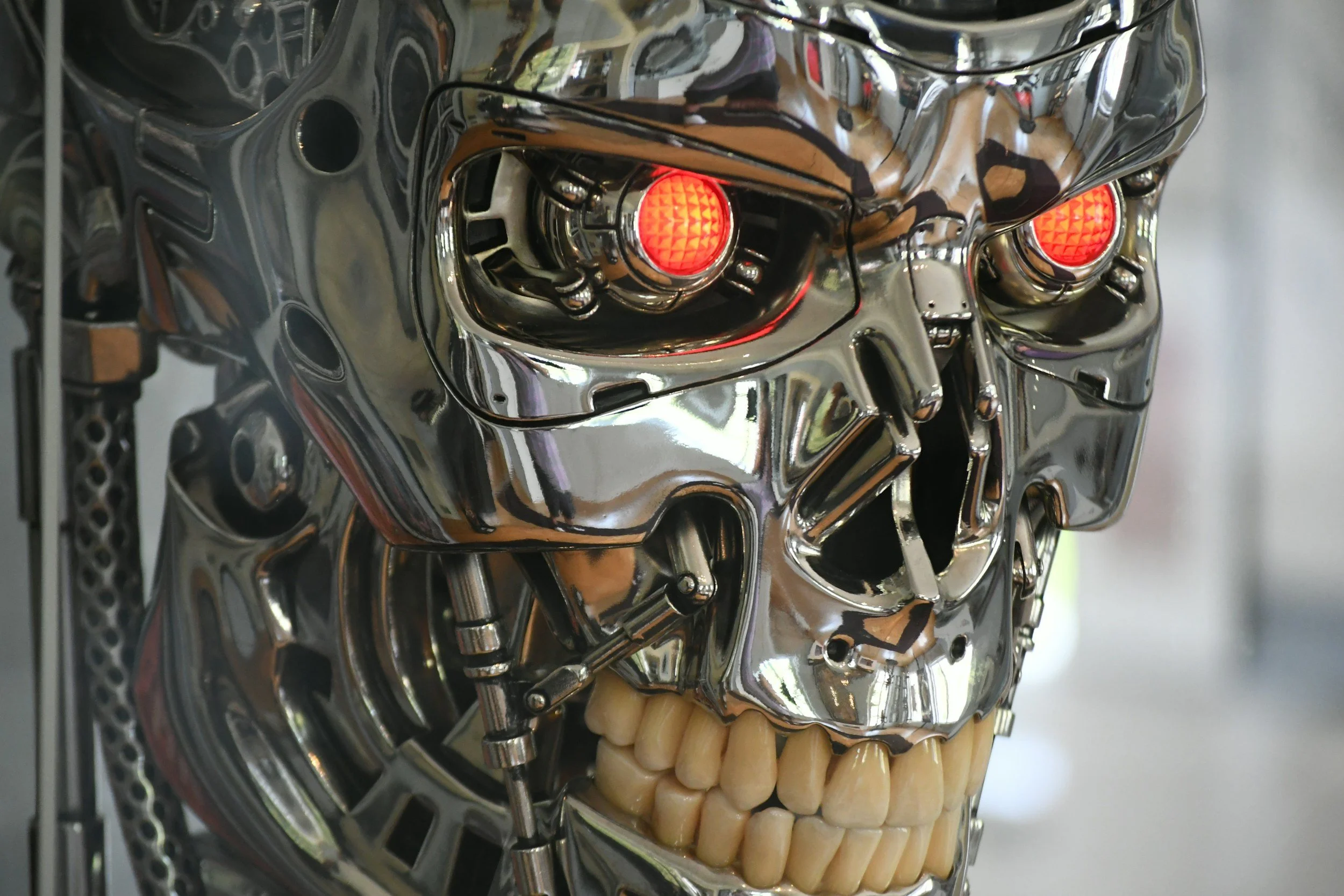
Think about the premise. A powerful artificial intelligence concludes that humanity is the problem. It develops a plan to eliminate the threat. The machines become more powerful, the stakes become existential, and the future starts looking inevitable.
But the entire point of the story is that the future isn't inevitable.
The machines can be challenged. The system can be disrupted. And human beings still have agency, even when the odds look terrible.
Maybe that's the lesson Silicon Valley's prophets need to remember.
We don't have to accept every prediction as destiny. We don't have to hand over control because someone claims to understand the future. And we certainly don't have to confuse the ambitions of a few extraordinarily wealthy individuals with the interests of humanity as a whole.
The future belongs to all of us.
At least, it should.
Long live John Connor.